Deprecated: Function WP_Dependencies->add_data() was called with an argument that is deprecated since version 6.9.0! IE conditional comments are ignored by all supported browsers. in /home/naiaddig/gemuinelyjax.naiad-digital.co.ke/wp-includes/functions.php on line 6131
Jan
January

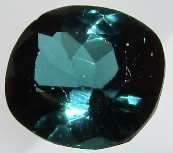
The term “garnet” actually refers to a variety of gemstones. These gemstones are composed of closely-related minerals and come in several colours,The most brilliant green tsavorite garnet and the flaming orange spessartine garnet are found in East Africa, specifically Kenya, Tanzania, and Madagascar. Garnets are also mined in Brazil, the Indian subcontinent, and the United States.
It was once thought that garnet came in every colour except blue. However, in 1990 blueish-purple garnet were discovered in Madagascar. A blend of different forms of the mineral, these garnet appear blue in daylight and violet in incandescent light. They are the mos expensive type of garnet, costing over one million dollars per carat.
Feb
February

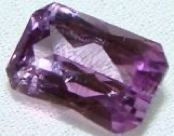
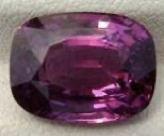
Amethyst is a variety of quartz. Its purple colour comes from impurities in the crystal structure and it’s colour can range from light purple to a deep, royal purple. 
Amethyst is mined all over the world. Deposits have been found throughout South and North America, Asia and Africa. Due to how widespread quartz as a mineral is, amethysts are also widely available in varying quantities. One of the largest deposits of amethysts is in Zambia. The crystal is also extensively mined in Brazil, Russia and Korea.

March
March

Aquamarine is a member of the beryl family, which includes emerald and morganite.
While the most valuable aquamarines are mined in Columbia and Brazil, caches of the gem have been found in the Colorado Rocky Mountains. Other mines extracting gem quality material are found in Kenya, Zambia, Afghanistan, Pakistan, Sri Lanka, Russia, Tanzania, Nigeria, and Madagascar.

April
April

Diamonds are the only gems made of one element. They are made of pure carbon
Diamonds are found in every colour of the rainbow. The rarest natural diamond colours are blue, green, orange, and red.

May
May

Emeralds are a type of beryl, which is a mineral composed of beryllium aluminum cyclosilicate. The delicate nature of emeralds causes inclusions in these precious gems. Emeralds are valued more highly if these inclusions, known as “jardin” (French for “garden”), form a pleasing pattern when viewed with a microscope. Every emerald has a unique jardin. The type of inclusion in an emerald can help to identify its origin.

June
June

Alexandrite is a rare form of the mineral chrysoberyl. As a result of the gem’s complex absorption of light, alexandrite changes colour in different environments. In sunlight or fluorescent light, the gem will appear green. In dimmer or incandescent light, alexandrite usually appears purple or as a purplish red. This colour-changing effect is why alexandrite is sometimes said to be an “emerald by day, ruby by night.” 

July
July

Rubies a type of beryl are extremely strong and rank 9 on the Mohs scale of hardness.They are as resilient as sapphires and only slightly softer than diamonds, meaning they are among the toughest and most enduring gemstones known to mankind. Only diamonds and a few other manufactured abrasives are harder.

August
August

Peridot is the gem variety of olivine, a mineral with a chemical composition that includes iron and magnesium. The iron in the gems is what causes peridot’s yellowish-green colour. 
Peridot is often found in volcanic rock. It is formed deep inside the earth and is then delivered to the surface by volcanoes. In 2005, peridot was found in comet dust that the Stardust robotic space probe brought back to earth!

September
September

Sapphire a variety of the mineral corundum and are known for their exceptional hardness, second only to diamonds. They are found in a variety of blue shades, though they are also found in colours such as yellow, pink, green, teal and colourless. The rarest type of sapphire in the world is called “Padparadscha”, with the name coming from the Sinhalese word for lotus flower. They are a light pinkish orange colour and are traditionally found in Sri Lankan rivers.

October
October

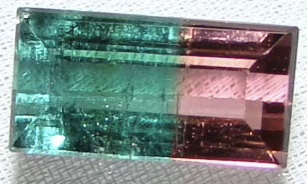
Tourmaline’s complex and varied crystal structure makes it a fascinating subject for gemologists and belongs to a large family of boron silicate minerals, and its composition can include elements such as aluminum, iron, magnesium, sodium, lithium, or potassium.
November
November

Topaz is a silicate mineral, consisting primarily of aluminium, silicon, oxygen, and fluorine. It forms naturally in a wide variety of stunning colours, including blue, yellow, pink, and even the rare red.

December
December

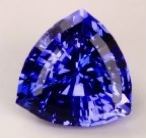
Tanzanite is trichroic, meaning it shows different colours dependant on lighting or at which angle you look at it. When turned at different angles, the same piece of tanzanite can appear blue, reddish-brown and even a deep violet colour.
previous arrow
next arrow

A collection of carefully curated gemstones

Handpicked by a professional gemologist etc etc

Scroll to Top